
Anyone buying a new-build apartment in Bulgaria will sooner or later come across the terms Act 14, Act 15 and Act 16. For a first-time buyer, these sound overly technical but understanding them is essential for anyone purchasing a property off-plan or under construction. In this article, we explain clearly what each document represents, what the differences are, when they are issued and most importantly when you can actually move into your new home.
Why Are Act 14, Act 15 and Act 16 Important for the Buyer?
The three documents represent the mandatory inspection stages that every building must pass under Bulgarian law specifically under the Spatial Planning Act and its associated regulations. Each act certifies that the construction meets the established standards for that particular stage.
Importantly, each subsequent act can only be issued on the basis of the previous one. Act 15 cannot be issued without Act 14. And a permit to use the building cannot be issued without Act 15.
Act 14: The Rough Construction Is Complete
What Is Act 14?
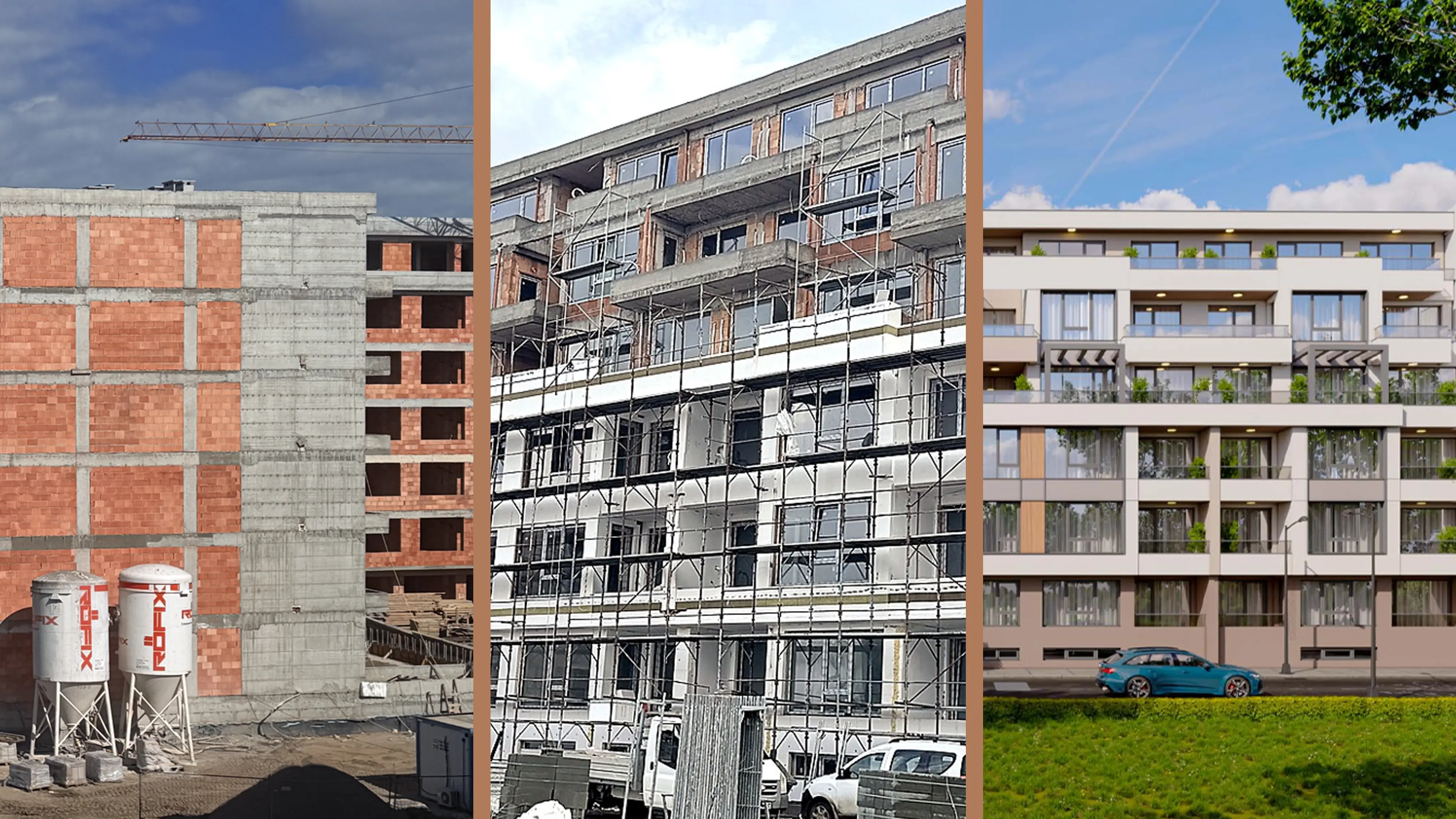
Act 14 is issued when construction reaches the stage known as “shell” or “rough” construction. This means the building is physically standing: foundations, columns, walls, floor slabs and roof are all complete but finishing works such as facades, interiors and installations are yet to begin.
Who Signs Act 14?
The document is drawn up and signed by:
- The investor (developer)
- The construction supervisor
- The designer
Why Is Act 14 Important for the Buyer?
Act 14 is particularly significant from a legal standpoint once it is issued, the notarial transfer of the property can take place. This means the buyer can receive a title deed and be officially registered as the owner, even before the building is fully completed.
The investor of the building has 5 years from the date the building permit is issued to reach the Act 14 stage. If they fail to do so, the building permit lapses.
Practical tip: If you are buying off-plan, always check whether the building permit is still valid and how much of the 5-year period has already elapsed.
Act 15: The Building Is Fully Complete
What Is Act 15?
Act 15 is the document confirming that the building is fully finished. It formally transfers the completed construction from the builder to the investor. In practice, it is the official certification that all construction and installation works have been carried out in accordance with the approved project plans.
Who Signs Act 15?
Act 15 requires the signatures of a significantly wider group of parties:
- The builder
- The investor
- The construction supervisor
- The designers across all sections of the project
- Representatives of utility companies (electricity, water, etc.)
- The owners of individual units in the building including you as the buyer
Why Is Act 15 Important for the Buyer?
Act 15 is the direct prerequisite for issuing Act 16 (or the Certificate of Commissioning). Without it, the final permit to use the building cannot be obtained.
It is worth noting that apartment owners are required to participate in the signing of Act 15. If you have purchased a unit, you will most likely be invited to sign this document.
Act 16: You Get the Keys
What Is Act 16?
Act 16 is the final act in the construction process. Its official name is the “Protocol Establishing the Suitability for Use of the Construction,” and it certifies that the building has been completed in accordance with the approved plans and is fit to be put into use.
This is the document every new-build buyer is waiting for because once it is issued, you can legally occupy the property, register your address and use the apartment without any restrictions.
An Important Distinction: Act 16 and the Certificate of Commissioning
There is an important nuance here that many buyers are unaware of:
- For Category I to III buildings (motorways, bridges, larger public buildings) — Act 16 is issued by a state acceptance commission, after which the Regional Directorate for National Construction Control issues a Permit for Use.
- For Category IV to VI buildings (residential and mixed-use buildings of low to medium height – which covers most apartment blocks) – Act 16 is not issued. Instead, a Certificate of Commissioning is issued by the chief architect of the relevant municipality.
In everyday conversation, buyers use the term “Act 16” to refer to both documents and this is completely understandable. What matters is that both have the same end result: the building is legal, complete and ready to live in.
What Is Checked When Act 16 Is Issued?
The inspection for the final act establishes:
- The legality of the completed building
- Whether the building was constructed according to the approved plans
- The correspondence between the actual construction and the approved project
If any discrepancy is found between the approved plans and the actual construction, the permit for use cannot be issued until those discrepancies are resolved or legalised.
When Do You Actually Get the Keys?
Technically, it is possible to receive the keys before Act 16 if the investor hands them over after Act 15. However, you can only legally live in the apartment and register your address once Act 16 (or the Certificate of Commissioning) has been issued.
When purchasing a new-build property, it is therefore important to:
- Know what stage the building is currently at
- Establish the estimated timeline for Act 16
- Ensure your contract with the developer clearly states these timelines
What Should You Check as a Buyer?
Before signing a preliminary contract for a new-build apartment, ask the following questions:
- Is the building permit still valid? Check that it falls within the 5-year period and that Act 14 has already been issued.
- What stage is the construction at? Has Act 14 or Act 15 already been issued? Or is the project still at the off-plan stage?
- What is the estimated timeline for Act 16? Ask the investor for a realistic forecast and make sure it is written into the contract.
- Is the documentation transparent? A reliable investor provides full access to the construction paperwork and documentation at any time.
InterHomes: Transparency at Every Stage of Construction
Our team ensures full transparency throughout the construction process. For each of our projects, information on construction stages is always available and up to date. If you are considering purchasing a new-build apartment in Pomorie, our team is ready to answer any question regarding documentation, timelines and the purchasing process.
Explore the InterHomes apartments and contact us for a free consultation from your first enquiry to receiving the keys, we will be with you at every step.