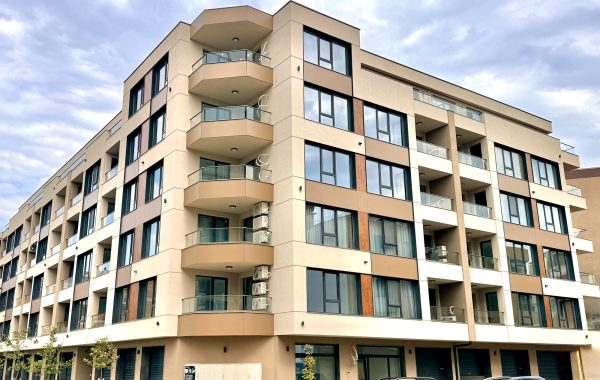
Bulgaria continues to be one of the most accessible and attractive destinations in Europe for purchasing real estate particularly along the Black Sea coast. But for foreign buyers, the question inevitably arises: can a foreigner buy an apartment in Bulgaria, and if so, under what conditions?
As with any legal topic, the details matter. In this article, we explain exactly what is permitted, what the difference is between buying an apartment and buying land, what documents are required and what role the notary plays throughout the process.
Apartment or Land: The Key Distinction You Need to Know
There is a fundamental distinction in Bulgarian law that shapes the entire process for a foreign buyer.
Apartments and Buildings
Foreigners and foreign legal entities can freely acquire ownership of residential properties, offices and other buildings in Bulgaria with no restrictions and without needing to register a company. This means that a new-build apartment such as those offered by InterHomes in Pomorie can be purchased directly in your name, regardless of your nationality.
Land and Plots
When it comes to purchasing land, the situation is different. Foreigners can only own land in Bulgaria through a Bulgarian legal entity for example, a sole trader company (EOOD) or a limited liability company (OOD). The exception applies to citizens and companies from EU and EEA member states, who may acquire land under the same conditions as Bulgarian nationals.
This means that if you are buying an apartment which is the case with most new-build properties in Pomorie the process is straightforward and uncomplicated, regardless of whether you are an EU citizen, a British national, a Russian citizen or a national of any other country.
Citizens of Third Countries: What Rules Apply?
The situation for non-EU citizens including Russian citizens buying an apartment in Bulgaria is also clear, though with slightly different parameters.
Natural persons from outside the EU may purchase buildings and premises, but not land.
An important note: following Brexit, British nationals can no longer purchase land except through a legal entity, but they can freely purchase apartments and buildings. Similar rules apply to citizens of Turkey, the United States and other non-EU countries.
What Documents Are Required When a Foreigner Buys Property in Bulgaria?
The documentation for a property purchase by a foreigner is relatively standard, but there are several specificities to be aware of.
Personal Identification Documents
The foreign buyer must have a Bulgarian personal identification number or a personal number for foreigners (LNCh) required for the notarial transaction and tax documentation. This number is usually issued automatically during the purchase process.
Identity Documents
A valid identity document is required either a national ID card or a passport.
Translations and Legalisation
When a foreigner purchases property, translations and an apostille are required for all foreign documents. Since virtually all documents must be provided with a certified translation, in certain cases the presence of a sworn interpreter is also required to accompany the signing of the transaction before the notary.
Transaction Documents
The notary will typically require a title deed (notarial deed, deed of gift or court decision), a tax valuation certificate from the relevant municipality, and a cadastral sketch or plan of the property from the Agency for Geodesy, Cartography and Cadastre.
The Role of the Notary in a Transaction Involving a Foreign Buyer
The notary is the central figure in every property transaction in Bulgaria and when a foreigner is involved, their role carries even greater significance.
Mandatory Presence Before a Notary
The transaction must be concluded before a Bulgarian notary, in the Bulgarian language without exception, regardless of the buyer’s nationality.
An Interpreter at the Transaction
Notarial certification requires the presence of an interpreter if the buyer does not speak Bulgarian. If you do not speak Bulgarian, the notary is obliged to appoint an interpreter. We recommend clarifying this detail with the notary in advance to avoid any delays on the day of the transaction.
What the Notary Verifies
The notary verifies the identity of the parties, the legality of the ownership and whether the seller has the necessary rights to dispose of the property. The notary may also request additional documents that are not legally mandatory but are necessary depending on the specific case including declarations confirming the absence of outstanding tax obligations.
Registration in the Property Register
Registration in the Property Register is the condition under which ownership rights formally arise without it, the transaction is not fully complete. In practice, this is handled automatically by the notary, but it is good practice for the new owner to carry out an independent verification.
Purchasing Remotely: Is It Possible Without Being Present in Bulgaria?
One of the most frequently asked questions from foreign buyers is whether the purchase requires travelling to Bulgaria.
A foreigner can purchase a property without being physically present by authorising a lawyer or trusted representative to act on their behalf. To do this, a notarially certified power of attorney is prepared in the buyer’s home country. If that country is a member of the Hague Convention, the document is apostilled and then translated and legalised into Bulgarian.
This means you can complete the purchase of a new-build apartment in Pomorie without leaving your home provided you have a reliable representative on the ground to protect your interests.
Read more on this topic in our article “Buying Property in Bulgaria Online: Mission Possible.”
Mortgage Financing for Foreign Buyers
A foreigner can purchase property in Bulgaria using a mortgage loan, provided they meet the requirements of Bulgarian banks that offer mortgage products to foreign nationals. It is important to know that not all banks offer this service, and the requirements for foreign buyers are generally stricter than those for Bulgarian nationals.
We recommend researching which banks actively work with foreign buyers before choosing a financing model.
What Costs Should You Expect?
In addition to the purchase price itself, foreign buyers should budget for the following additional costs: notary fees and registration fees, local property transfer tax (typically 2-3%), and annual property tax and waste collection fees, payable every year.
Additional costs may include bank transfer fees, interpreter fees and agent commission, depending on the specific case.
Use Independent Legal Assistance
Many buyers rely solely on the broker or the notary. The reality, however, is that only an independent lawyer hired by you personally will fully protect your interests when purchasing a property.
This is especially true for foreign buyers who are not familiar with the details of Bulgarian legislation and market practice.
InterHomes: Experience With Foreign Buyers in Pomorie
Purchasing an apartment in Pomorie from abroad or as a foreign national is a process that the InterHomes team handles regularly. Some of our clients are citizens of EU member states, the United Kingdom, Russia and many other countries and for each of them, the process is structured, transparent and tailored to their specific situation.
We offer full support for remote purchases, video consultations, complete legal documentation and communication in Bulgarian, English and Russian.
For those considering purchasing a new-build apartment in Pomorie whether you are an EU citizen, a British national, a Russian citizen or a national of any other country, our team is ready to answer every question relating to the process, the documentation and the timelines.
Explore the apartments at InterHomes and contact us for a free consultation.